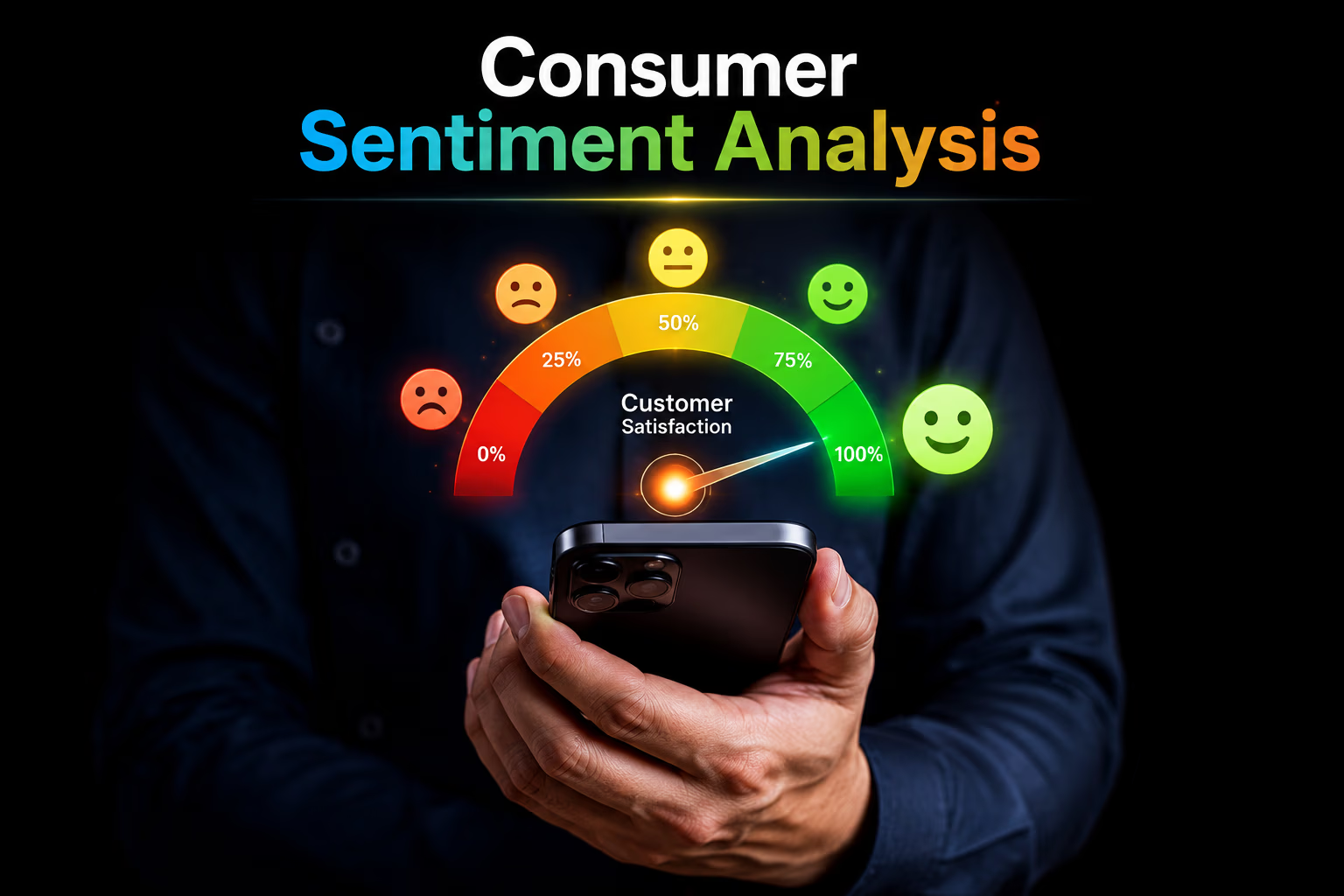
Market research in 2026 is no longer a sequence of surveys, reports, and delayed insights. It has become a real-time intelligence system, powered by market research automation, web artificial intelligence, and advanced web intelligence tools capable of processing millions of digital signals at unprecedented speed. As consumer behaviour becomes more dynamic, fragmented, and emotionally driven, automation and web intelligence together are transforming how insight teams detect, validate and act on emerging shifts.
Web Intelligence Tools as the Core of Real Time Consumer Intelligence
In 2026, consumer intelligence is generated not only from structured surveys but from continuous streams of digital interactions.
Modern web intelligence tools now analyze:
Millions of micro-expressions across forums, reviews, social platforms
Behaviour traces from search patterns, browsing flows, and digital communities
Cross-channel signals captured through digital listening and web listening systems
This shift converts passive online noise into structured insight, revealing sentiment shifts, category momentum, problem-solving patterns, and brand-relevance changes before they appear in traditional market indicators.
These systems go beyond keyword tracking. They understand semantic context, behavioural probabilities, and emotional gradients providing a deeper, multi-dimensional reading of human decision-making.
Automation: The Structural Engine Powering Market Research in 2026

Automation has eliminated the slowest parts of research:
sampling, data cleaning, tagging, synthesis, segmentation, and report generation.
In 2026:
82% of high-performing insight teams run automated pipelines for recurring studies
Automated quant workflows reduce insight cycle time by 60%
AI-assisted survey logic improves response accuracy by 40%
Continuous category-tracking models run 24/7, reducing blind spots to near-zero
This is not a convenience upgrade it’s a structural transformation.
Market research automation enables insight engines that operate at the speed of culture, not the speed of traditional research timelines.
Where Automation and Web Intelligence Converge
The real power of 2026 insight systems emerges when web intelligence and market research automation operate as a single pipeline.
This convergence enables:
- Instant early-signal detection through digital listening ecosystems
- Automated validation loops that test hypotheses through always-on quant models
- Predictive modelling that identifies upcoming behavioural shifts with high confidence
- Cross-source triangulation between unstructured UGC, structured surveys, and behavioural signals
In effect, web intelligence finds the signal; automation verifies it; AI amplifies its predictive value.
This fusion is what allows brands to track market movements in near real time, rather than waiting for monthly summaries or quarterly reports.
The New Standard for Rapid Market Understanding

The brands winning in 2026 won’t be the ones with the biggest datasets they’ll be the ones with the fastest, cleanest, and most automated intelligence architecture. Real-time consumer intelligence has become a competitive advantage, giving teams the ability to anticipate demand, track cultural shifts, and adjust strategy in hours rather than months.
As automation and web intelligence accelerate, market research is shifting from a retrospective activity to a continuous insight system. It no longer exists to explain what happened last quarter; it now interprets what is happening in real time and predicts where behaviour will move next.
In a landscape where digital behaviour shifts minute by minute, the convergence of automation and web intelligence is no longer optional. It is the only reliable way to see the market clearly, respond with precision, and stay ahead of accelerating consumer change.