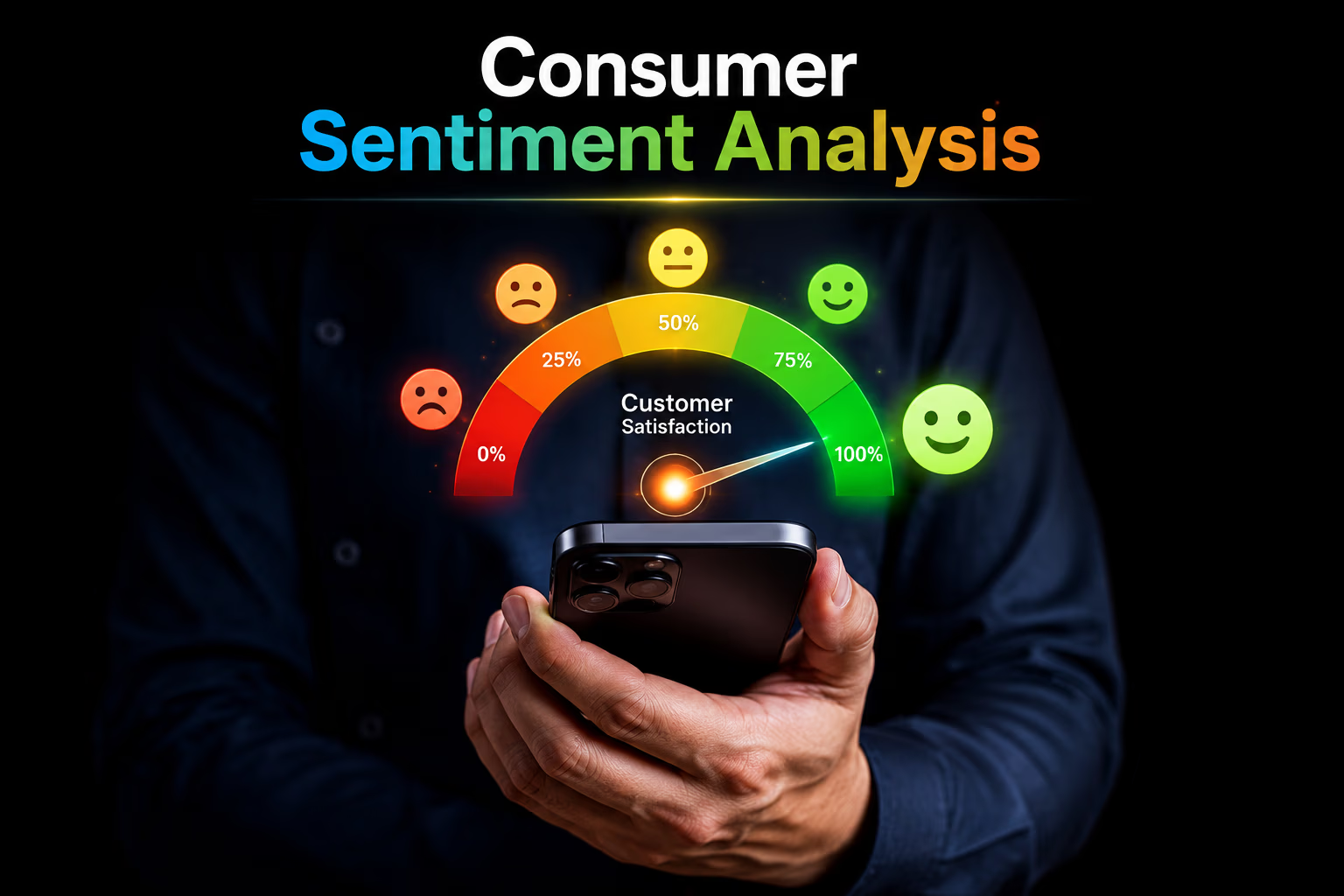
Key Points
The global Predictive Behavioral Analytics market is projected to reach $12.8 billion in 2026, growing at a 22.3% CAGR.
80% of innovative organizations have moved to "Proactive Listening" systems that track website navigation, purchase history, and app usage in real-time.
Understanding Quantitative Research and Behavioral Data
Quantitative research focuses on collecting and analyzing structured numerical data to identify patterns, trends, and relationships across large populations. Common quantitative research methods include surveys, experiments, statistical modeling, and structured data analysis. These approaches allow researchers to measure consumer preferences, test hypotheses, and evaluate the impact of products, campaigns, or services using measurable evidence.
Behavioral data integration introduces an additional dimension to this process. Behavioral data refers to observed actions rather than self-reported opinions. Examples include browsing activity, search behavior, digital engagement, purchase journeys, and interactions across online platforms. When this behavioral information is integrated into quantitative research, it helps researchers understand not only what respondents say but also how they actually behave in real-world environments.
This combination of reported data and observed behavior allows quantitative studies to produce more accurate and context-rich insights.
Why Behavioral Data Integration Matters
Traditional survey-based research has long been effective at capturing attitudes, preferences, and stated intentions. However, consumer decisions are often influenced by complex factors such as timing, context, exposure to information, and digital interactions.
Behavioral data helps address these limitations by providing evidence of real-world activity. Instead of relying entirely on memory or perception, researchers can examine patterns in how consumers search for information, interact with digital platforms, or move through purchase journeys.
Integrating behavioral signals into quantitative datasets provides several advantages:
- Greater reliability of insights by validating survey responses against actual behavior
- Improved contextual understanding of when and how consumer decisions occur
- More accurate predictive models that combine attitudes with behavioral indicators
- Enhanced segmentation based on both stated preferences and observed engagement patterns
These integrated datasets enable researchers to move beyond static snapshots of opinion toward a more dynamic understanding of consumer behavior.
Expanding Consumer Intelligence Through Digital Signals

The rise of digital ecosystems has dramatically increased the availability of behavioral signals that can support quantitative analysis. Consumers now interact with brands through search engines, social media platforms, mobile apps, and digital marketplaces throughout their daily routines.
These interactions generate continuous streams of behavioral data that help researchers understand how preferences and decisions evolve in real time. When integrated with traditional survey data, these signals can reveal patterns that might otherwise remain hidden in isolated datasets.
Some of the most valuable behavioral signals researchers analyze today include:
- Search activity, which reveals emerging interests, needs, and intent
- Social discussions and online conversations, capturing organic consumer opinions
- Digital engagement patterns across websites, apps, and marketplaces
- Purchase journeys and browsing behavior, showing how decisions develop over time
- Content interactions and product discovery signals across platforms
Web-based behavioral signals are particularly valuable because they capture organic consumer conversations and search activity, reflecting how people naturally express interests, concerns, and preferences in digital environments.
Toward More Integrated Research Models
As research environments continue to evolve, organizations are increasingly moving toward integrated research models that combine multiple data sources. Quantitative surveys, behavioral signals, and qualitative conversations each offer unique perspectives on consumer behavior.
When these sources are analyzed together, they enable a more comprehensive view of market dynamics and decision-making processes. Modern research approaches increasingly rely on combining multiple intelligence layers, including:
- Quantitative survey data to measure attitudes, preferences, and statistical trends
- Behavioral signals from digital platforms that reveal real-world consumer actions
- Qualitative conversations and narratives that explain the motivations behind observed behavior
Structured analytical frameworks can then help filter and prioritize meaningful signals within large datasets. Approaches that evaluate insights based on recency, relevance, and resonance allow researchers to identify patterns that truly reflect current consumer sentiment and emerging market dynamics.
Platforms such as BioBrain Insights support the integration of behavioral web intelligence, structured quantitative signals, and conversational research insights. Capabilities such as the RRR framework, digital listening through web intelligence, and multimodal qualitative analysis tools like InstaQual illustrate how modern research ecosystems are evolving toward more connected, scalable, and insight-driven intelligence models.