Saudi Arabia Is No Longer Just a Growth Market - It Is a Consumer Intelligence Market
Saudi Arabia is undergoing one of the most significant economic and consumer transformations in the world.
For decades, businesses viewed the Kingdom primarily through the lens of energy and industrial growth. Today, that view is rapidly changing. Saudi Arabia is becoming a digitally connected, youth-driven, and consumption-oriented economy where understanding consumer behavior has become increasingly important for business success.
This shift explains why market research Saudi Arabia is attracting growing attention from brands, investors, retailers, healthcare companies, fintech players, and international businesses entering the region.
Saudi Arabia’s transformation is closely tied to Vision 2030, a national diversification strategy designed to reduce dependence on oil and expand sectors such as:
- tourism
- entertainment
- healthcare
- retail
- technology
- logistics
- financial services
The scale of this transition is substantial.
Saudi Arabia has a population exceeding 35 million, with more than 70% under the age of 35. Internet penetration exceeds 99%, smartphone usage ranks among the highest globally, and digital adoption continues accelerating across nearly every major sector.
This creates opportunity - but also uncertainty.
Consumer expectations are changing quickly.
And that is exactly why Saudi Arabia market research is no longer optional for brands seeking growth.
What Makes Saudi Market Research Different?
Many businesses entering the Kingdom assume research approaches used in GCC will work equally well in Saudi Arabia.
That assumption often creates problems.
Saudi Arabia is not simply another Middle Eastern market.
Consumer behavior is shaped by a distinctive combination of:
- culture
- religion
- language
- digital behavior
- family influence
- economic transition
- social modernization
This makes Saudi market research more nuanced than generic regional studies.
For example, purchasing decisions often involve strong household influence.
Trust, community perception, and social acceptance can influence:
- brand choice
- financial decisions
- healthcare adoption
- retail behavior
- media engagement
At the same time, Saudi consumers are becoming increasingly digital.
According to recent regional digital trends:
- social media penetration exceeds 79-80%
- mobile-first engagement dominates online activity
- e-commerce and digital payments continue expanding rapidly
Saudi Arabia also ranks among the world’s strongest users of:
- YouTube
- Snapchat
- TikTok
- mobile commerce platforms
This creates a research environment where traditional methods alone may not be enough.
Modern market research Saudi increasingly combines:
- surveys
- interviews
- behavioral data
- social listening
- digital intelligence
to build more complete consumer understanding.
Market Research Companies in Saudi Arabia
The ecosystem of market research companies Saudi Arabia has become increasingly diverse.
Rather than relying on one agency model, brands today can choose between:
- global research firms
- regional specialists
- syndicated data providers
- agile research platforms
- intelligence-led systems
Each serves different research needs.
1. Ipsos Saudi Arabia
Among the most established names operating in Saudi Arabia is Ipsos.
- public opinion research
- consumer studies
- CX programs
- healthcare intelligence
- government research
- brand tracking
Its large operational footprint allows it to conduct:
- national surveys
- large-scale fieldwork
- multi-city research programs
This makes Ipsos particularly attractive for organizations requiring scale and structured execution.
Large enterprises and public-sector projects often evaluate Ipsos because of its established methodology and field capability.
2. Kantar
Another major player within market research company in Saudi Arabia discussions is Kantar.
Kantar is especially recognized for:
- brand measurement
- media analytics
- campaign effectiveness
- shopper behavior
- innovation testing
As Saudi retail and advertising ecosystems expand, Kantar’s expertise has become increasingly relevant.
Brands commonly work with Kantar when evaluating:
- campaign performance
- brand equity
- market positioning
- customer perception
Its methodologies are often valued for benchmarking and longitudinal analysis.
3. NielsenIQ (NIQ)
Retail transformation across Saudi Arabia has created growing demand for transaction-led intelligence.
This is where NielsenIQ (NIQ) becomes particularly important.
- retail measurement
- FMCG intelligence
- pricing analysis
- shopper behavior
- market share tracking
Saudi Arabia’s retail sector continues growing rapidly through:
- supermarkets
- e-commerce
- quick commerce
- food delivery
- modern retail formats
This makes retail intelligence increasingly valuable.
NIQ focuses less on opinion and more on:
- buying behavior
- category movement
- consumption trends
which supports pricing and merchandising decisions.
4. YouGov Saudi Arabia
Few firms have built as much visibility through digital polling and panel systems as YouGov.
- polling
- brand tracking
- digital consumer profiling
- opinion studies
- audience segmentation
Its strength comes largely from scalable online panels and digital-first participation environments.
For brands targeting younger Saudi consumers, YouGov often becomes relevant because of:
- speed
- online reach
- panel accessibility
However, like many panel-based systems, brands increasingly evaluate:
- respondent quality
- validation systems
- fraud controls
alongside speed.
5. BioBrain Insights
Alongside traditional firms, Saudi Arabia is also seeing growing interest in newer research environments built around intelligence-powered execution.
This is where BioBrain Insights enters the landscape.
BioBrain is positioned around:
- AI-native managed research
- structured quantitative workflows
- social and web listening
- faster qualitative intelligence
- contextual validation systems
Tools such as InstaQual support accelerated qualitative analysis, while frameworks such as RRR (Recency, Relevance, Resonance) reflect growing emphasis on signal quality and contextual reliability.
This reflects a broader shift happening across Saudi Arabia market research itself.
Many organizations increasingly seek:
- faster research cycles
- integrated intelligence
- digital monitoring
- validated insight systems
rather than isolated research projects alone.
Most Common Market Research Methods in Saudi Arabia
Research methods in Saudi Arabia are also evolving rapidly.
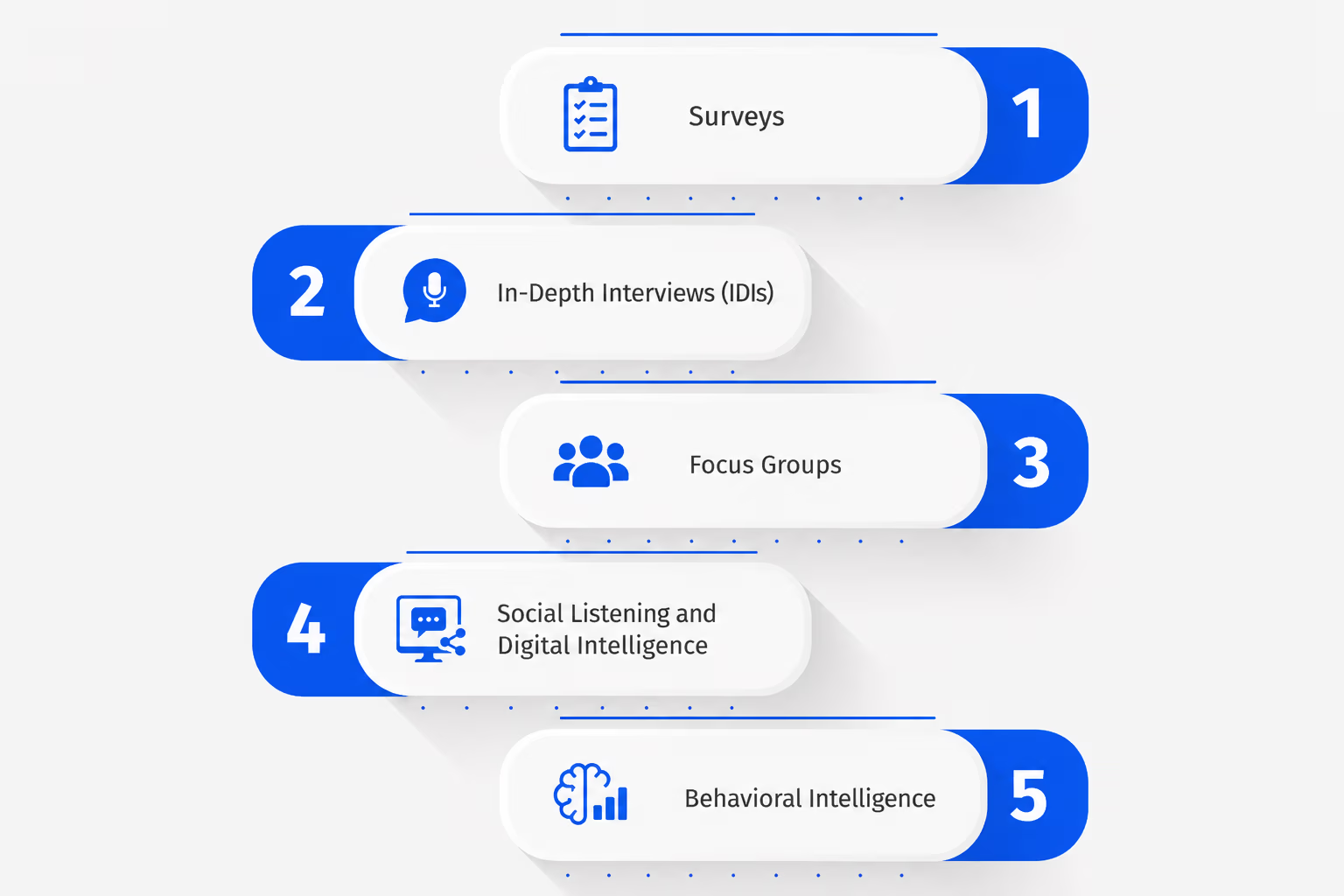
Organizations increasingly use multiple methodologies simultaneously.
Surveys
Surveys remain one of the most widely used methods in Saudi market research.
They are especially valuable for measuring:
- awareness
- satisfaction
- purchase intent
- customer experience
- pricing sensitivity
Because smartphone usage is exceptionally high, mobile-first survey design has become increasingly important.
In-Depth Interviews (IDIs)
Saudi consumers often make decisions shaped by:
- trust
- social perception
- cultural context
- emotional motivations
This makes IDIs highly valuable.
Interviews help researchers uncover:
- motivations
- barriers
- decision drivers
that surveys may miss.
Focus Groups
Focus groups continue playing an important role in:
- product testing
- campaign evaluation
- brand exploration
- cultural understanding
They are particularly valuable when organizations need to understand:
- language nuance
- perception shifts
- emotional reactions
before market launches.
Social Listening and Digital Intelligence
Saudi consumers are highly active across:
- TikTok
- Snapchat
- X
- YouTube
Brands increasingly use:
- sentiment analysis
- conversation tracking
- web intelligence
- digital listening
to understand:
- emerging trends
- consumer mood
- cultural momentum
in real time.
This method has become increasingly important because online conversations often evolve faster than formal surveys.
Behavioral Intelligence
Modern Saudi research increasingly studies:
- actual behavior
- transactions
- app usage
- digital engagement
- shopping patterns
rather than relying only on stated opinions.
Behavioral intelligence helps organizations understand:
not simply what consumers say
but what they actually do.
Brand Use Cases for Market Research in Saudi Arabia
The practical applications of Saudi Arabia market research continue expanding.
1. Retail and FMCG
Retail brands use research to understand:
- pricing
- store experience
- category demand
- product positioning
particularly as organized retail and e-commerce grow.
2. Tourism and Entertainment
Vision 2030 is reshaping tourism.
Research helps brands evaluate:
- traveler expectations
- destination appeal
- cultural preferences
- entertainment demand
before investment.
3. Healthcare
Healthcare organizations increasingly conduct research around:
- patient journeys
- treatment awareness
- service quality
- healthcare adoption
particularly as private healthcare expands.
4. Fintech and Banking
Saudi Arabia’s fintech ecosystem continues growing rapidly.
Research helps institutions understand:
- trust
- digital banking adoption
- payment behavior
- financial attitudes
before launching products.
5. Advertising and Localization
Campaigns increasingly require localization.
Research helps brands adapt:
- messaging
- visuals
- language
- positioning
to Saudi audiences.
Conclusion
Saudi Arabia is rapidly becoming one of the most strategically important consumer markets globally - not simply because of economic growth, but because of how quickly consumer expectations, digital behavior, and purchasing patterns are evolving.
This transformation is reshaping market research Saudi Arabia itself. Brands increasingly require more than survey execution alone. They seek research partners capable of combining local understanding, methodological rigor, digital intelligence, and contextual interpretation.
From established firms such as Ipsos, Kantar, NielsenIQ, and YouGov to newer intelligence-led systems like BioBrain Insights, the Saudi research ecosystem is becoming increasingly diverse. For organizations entering or expanding within the Kingdom, the strongest competitive advantage may no longer come from assumptions - but from understanding Saudi consumers with greater depth, speed, and contextual accuracy.


.avif)